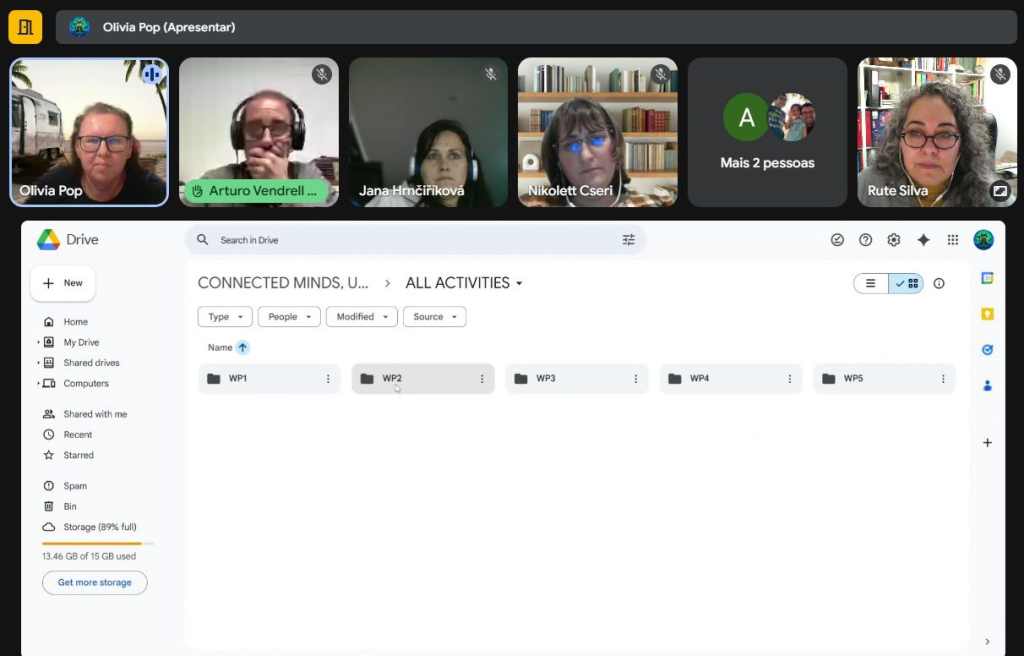
The second online partners’ meeting of the Erasmus+ KA220-SCH project Connected Minds, United Actions: Digital and Peer Collaboration for Inclusion and Sustainability was successfully held on 2 December 2025, bringing together representatives from all partner schools for another important stage of international cooperation.
Following the successful kick-off meeting in November, this session focused on moving the project from the planning phase into structured implementation. Partners worked collaboratively to finalize organizational procedures, communication methods, and documentation systems that will support the project throughout its 2025–2028 duration.
One of the key topics discussed was the use of official working and dissemination platforms. Partners confirmed the coordinated use of Shared Drive, Padlet, Trello, social media channels, the project website, and eTwinning to ensure effective communication, resource sharing, and visibility of project activities. These digital tools will play a central role in supporting collaboration among schools and maintaining transparent project management.
The consortium also discussed preparations for the international online seminars under ACT 2.2, focusing on organization, participation, and reporting procedures. Special attention was given to activity evidence collection, standardized documentation practices, and GDPR-compliant consent forms for students and teachers participating in project activities. These measures aim to ensure quality implementation and consistency across all partner countries.
Another important point on the agenda was the implementation of the Project Logo Workshop and the international voting process, which encourages student creativity, participation, and intercultural collaboration. Partners reviewed timelines, responsibilities, and dissemination strategies to maximize engagement within school communities.
The meeting highlighted the strong commitment of all partners to maintaining high standards in project coordination, quality assurance, and sustainable educational impact. By strengthening communication structures and clarifying implementation procedures, the partnership continues to build a solid foundation for future activities focused on inclusion, digital transformation, sustainability, and active participation.